Practical reference
Green Amethyst Cut & Windowing Guide
Pale prasiolite depends heavily on good cutting. This guide shows the main face-up problems to look for before you buy.
Quick answer
Look for an attractive outline, even brightness and a lively face-up view. A large transparent centre can be a window; broad dead-dark areas are extinction. Neither should dominate the stone.
Look for an attractive outline, even brightness and a lively face-up view. A large transparent centre can be a window; broad dead-dark areas are extinction. Neither should dominate the stone.
Three face-up appearances
Bright and balancedUseful light return across much of the face.
Windowed centreA large see-through area can make a pale stone look weak.
Heavy extinctionBroad dark areas can make the stone appear dull.
Cut terms in plain English
| Term | What it means when you look at the stone |
|---|---|
| Window | A see-through area, usually near the centre, where light leaks through rather than returning toward you. |
| Extinction | Dark areas that return little visible light from the viewing angle. |
| Face-up size | How large the stone looks from the top, not simply its carat weight. |
| Symmetry | How balanced the outline and facet arrangement appear. |
| Polish | The quality of the finished facet surfaces. |
A 30-second cut check
- Look straight down at the stone in ordinary light.
- Move it slightly and see whether brightness changes naturally across the face.
- Check whether a large clear “hole” dominates the centre.
- Look for broad dark zones that remain dead as the stone moves.
- Check that the outline looks balanced and facet edges appear clean.
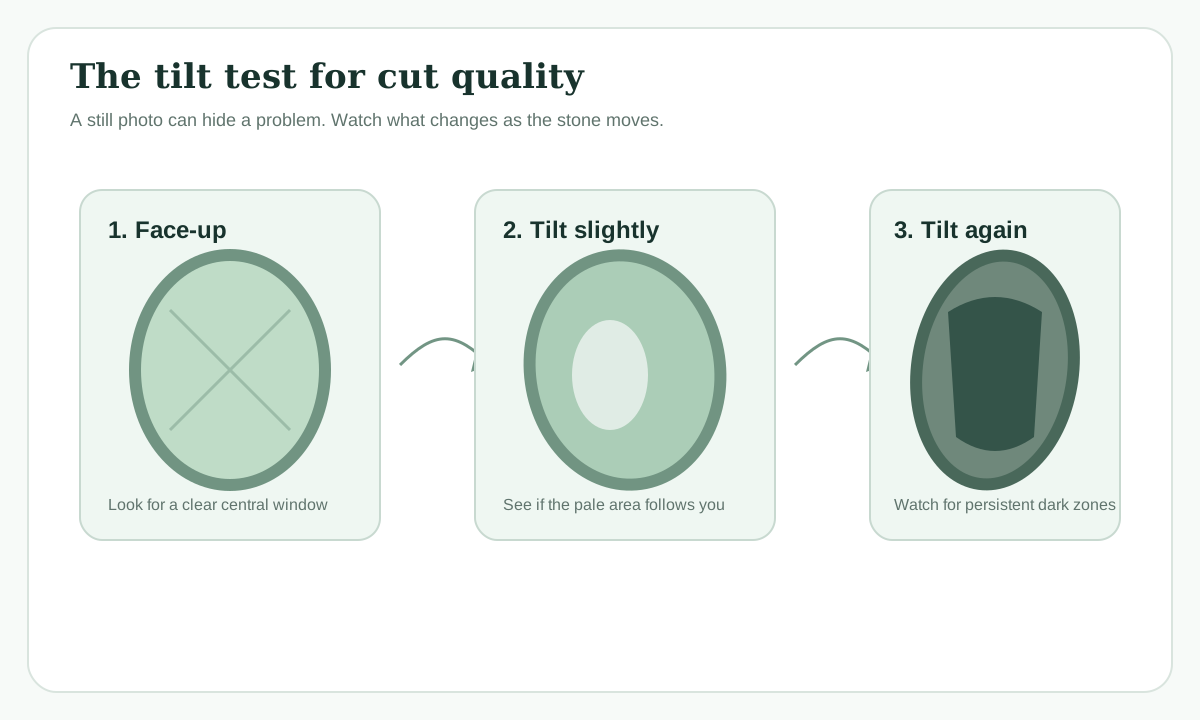
There is no universal “ideal cut” grade for prasiolite. Different shapes can be beautiful. The practical question is whether this particular stone looks lively, balanced and attractive to you.
- A straight-on face-up photo.
- A short video or at least a second angle.
- Normal lighting as well as any studio image.
- Dimensions so you can judge spread, not just apparent size in a crop.
What to ask for online
A healthy-looking stone does not need to stay bright in every facet at every angle. What you are checking is whether a large clear centre or broad dead-dark area dominates most views.
View 1Look straight down.
View 2Tilt slightly left and right.
View 3Check in ordinary room or daylight.
A faceted stone changes as the stone, camera or light moves. A single seller photo can hide a window or make dark areas look better or worse than they do in person.