Green Amethyst Size & Measurement Guide
Millimetres describe physical dimensions. Carats describe weight. You need both to understand how large a prasiolite stone really is.
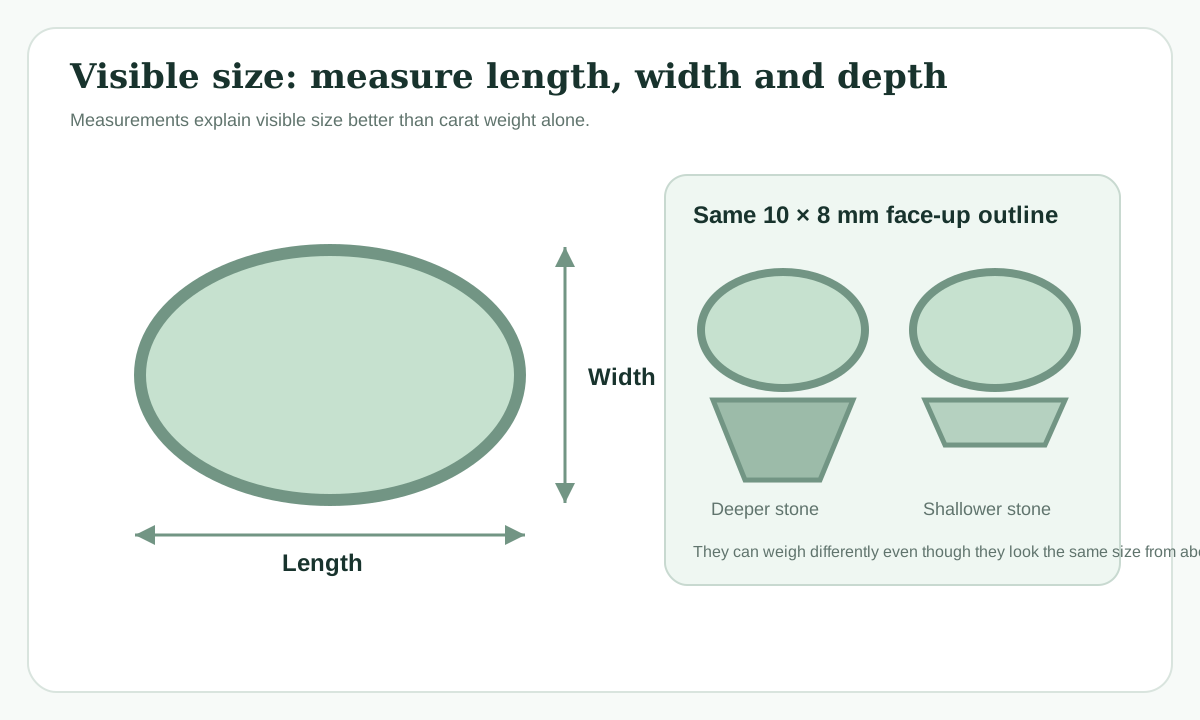
One carat equals 0.2 grams. A listing such as 10 × 8 × 5 mm describes dimensions, not weight. Two stones with the same length and width can still have different carat weights because their depth and proportions differ.
How to read gemstone measurements
| Shape | Typical measurement format | What to compare |
|---|---|---|
| Round | Diameter × depth | Face-up diameter first, then depth. |
| Oval | Length × width × depth | Length-to-width outline and overall depth. |
| Pear | Length × width × depth | Face-up spread, symmetry, point protection, depth. |
| Cushion | Length × width × depth | Outline shape, spread, depth, corner style. |
| Emerald/rectangle | Length × width × depth | Face-up size, proportions, depth, windowing. |
Carat weight is not the same as visible size
Carat is a unit of mass. The FTC defines one gemstone carat as one-fifth of a gram. Millimetre dimensions tell you how much space the stone occupies. This matters because a deeper stone can carry more weight below the setting without looking proportionally larger from the top.
What to record when comparing stones
- Carat weight
- Length
- Width
- Depth
- Shape
- Whether the dimensions are for the loose stone or finished setting
- Shape.
- Carat weight.
- Length, width and depth in millimetres.
- Whether measurements refer to the loose stone or finished piece.
- Clear face-up photographs that are not cropped so tightly that scale becomes misleading.
A useful listing should show
From the top, these stones may occupy a similar amount of space in a setting. Their weights can still differ because one carries more material below the face. That is why actual dimensions are more useful than guessing visible size from carat weight alone.
Same face-up length and width, but shallower.
Same face-up outline, but more depth below the top view.