
Choose the jewelry type
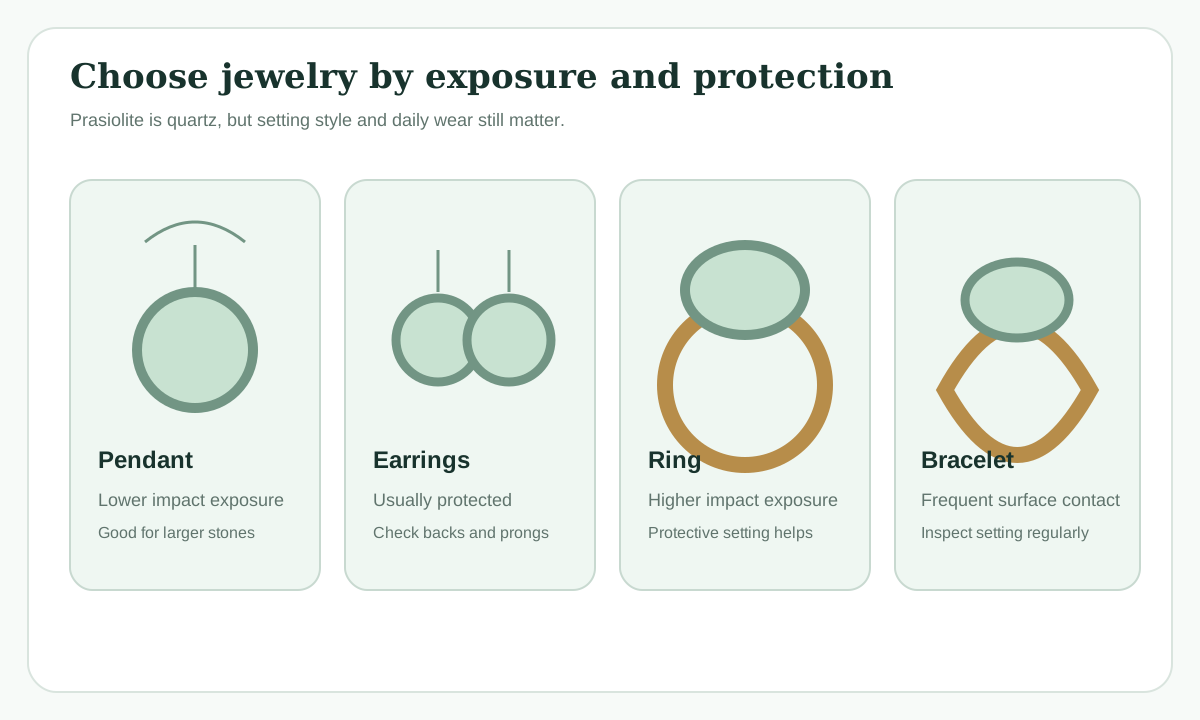
| Jewelry type | Practical fit |
|---|---|
| Pendant | Low impact exposure and excellent for larger stones. Check the bail and chain strength. |
| Earrings | Low abrasion and impact. Matching colour and cut matters more than exact carat weight. |
| Occasional-wear ring | A good option with a protective setting and reasonable care. |
| Daily ring | Possible, but requires more attention to prongs, edges, knocks, and cleaning. |
| Bracelet | More exposed to desks and hard surfaces; protective design is important. |
Choose a setting
Bezel settings protect the outer edge and can suit active wear. Halo settings add visual size and some edge protection. Prong settings expose more of the stone to light but require periodic inspection. Sharp corners on emerald, pear, and marquise cuts deserve special protection.
Choose by how you will wear it
Choose a metal
White gold or platinum
Often emphasizes mint and grey-green tones.
Yellow gold
Can make pale green appear warmer and more botanical.
Rose gold
Creates a pink-green contrast that some buyers find distinctive.
Shape and cut
Oval, cushion, emerald, pear, round, and checkerboard cuts are common. The best choice is the one that returns light evenly and suits the setting. Large shallow stones can look impressive in dimensions but weak in colour and brilliance.
Inspect the finished piece
- The stone sits level and does not move.
- Prongs are even, smooth, and fully contact the stone.
- No sharp metal edges catch fabric.
- The stone is reasonably eye-clean in normal viewing.
- The centre does not appear like a large transparent window.
- Metal type and karat are stamped or documented.
- Treatment disclosure and return terms are written.
Care after purchase
Use warm water, mild soap, and a soft brush. Remove rings for impact-heavy work. Store pieces separately to reduce scratching, and have frequently worn prongs inspected periodically.
Choose jewelry by how hard you are on it
Quartz has useful everyday scratch resistance, but jewelry durability depends on more than the Mohs number. Rings take more knocks than pendants and earrings, so the setting matters.
| Jewelry type | Typical exposure | Practical choice |
|---|---|---|
| Pendant | Low | One of the easiest ways to wear a larger prasiolite because the stone is less likely to hit hard surfaces. |
| Earrings | Low | Good for pale stones because light can reach them easily and impact risk is modest. |
| Ring | Higher | Choose secure prongs or a protective bezel/halo and avoid exposed corners for frequent wear. |
| Bracelet | Higher | Expect more contact with desks and hard surfaces; secure low-profile settings are preferable. |
Related reading
Care and cleaning · Price guide · Buying guide